AGING-IN-PLACE & FALL PREVENTION
Fall Prevention Home Assessment for Aging in Place
A fall prevention home assessment gives you a professional, room-by-room look at the hazards that put an older adult at risk, along with a written plan to fix them. I’m a licensed occupational therapist and Certified Aging-in-Place Specialist. My role is to assess and recommend, never to sell or install, so every suggestion is about safety rather than a sale.
When Families Call Me
Most calls come from a worried son or daughter, though plenty of seniors reach out for themselves. An aging in place assessment makes sense when:
Your parent has fallen, or nearly fallen, at home
Mom or Dad is becoming unsteady on stairs, steps, or uneven floors
A loved one is coming home after a hospital or rehab stay
A spouse has become the main caregiver and worries about getting hurt
You want to plan ahead and make changes before a crisis forces them
Planning ahead is the smartest time to call. Waiting until after a fall means making decisions under pressure, often while someone is recovering from an injury.
Where Falls Happen and What I Evaluate
Bathrooms and entrances deserve the closest attention because they combine wet or uneven surfaces with the hardest movements of the day: stepping over a tub edge, lowering onto a toilet, or balancing on a step while unlocking a door.
Entrances and Steps
Thresholds, porch and garage steps, railings, door hardware, and lighting where your parent comes and goes.
Bathrooms
Shower and tub entry, toilet height, flooring, and where secure support is truly needed.
Bedrooms
Bed height, the nighttime path to the bathroom, clutter, and safe ways to get up and down.
Kitchens
Reach ranges, frequently used items, standing tolerance, and safer ways to carry things.
Hallways and Stairs
Width, rugs, floor transitions, handrails on both sides, and turning space for a walker.
Lighting
Night lighting, switch locations, glare, and contrast at the edge of each step.
Recommendations Built Around the Person
Every report is specific: where a grab bar should go, what height a railing should be, which shower option fits both the space and the person. Typical recommendations include:
Properly anchored grab bars, secured into studs or blocking
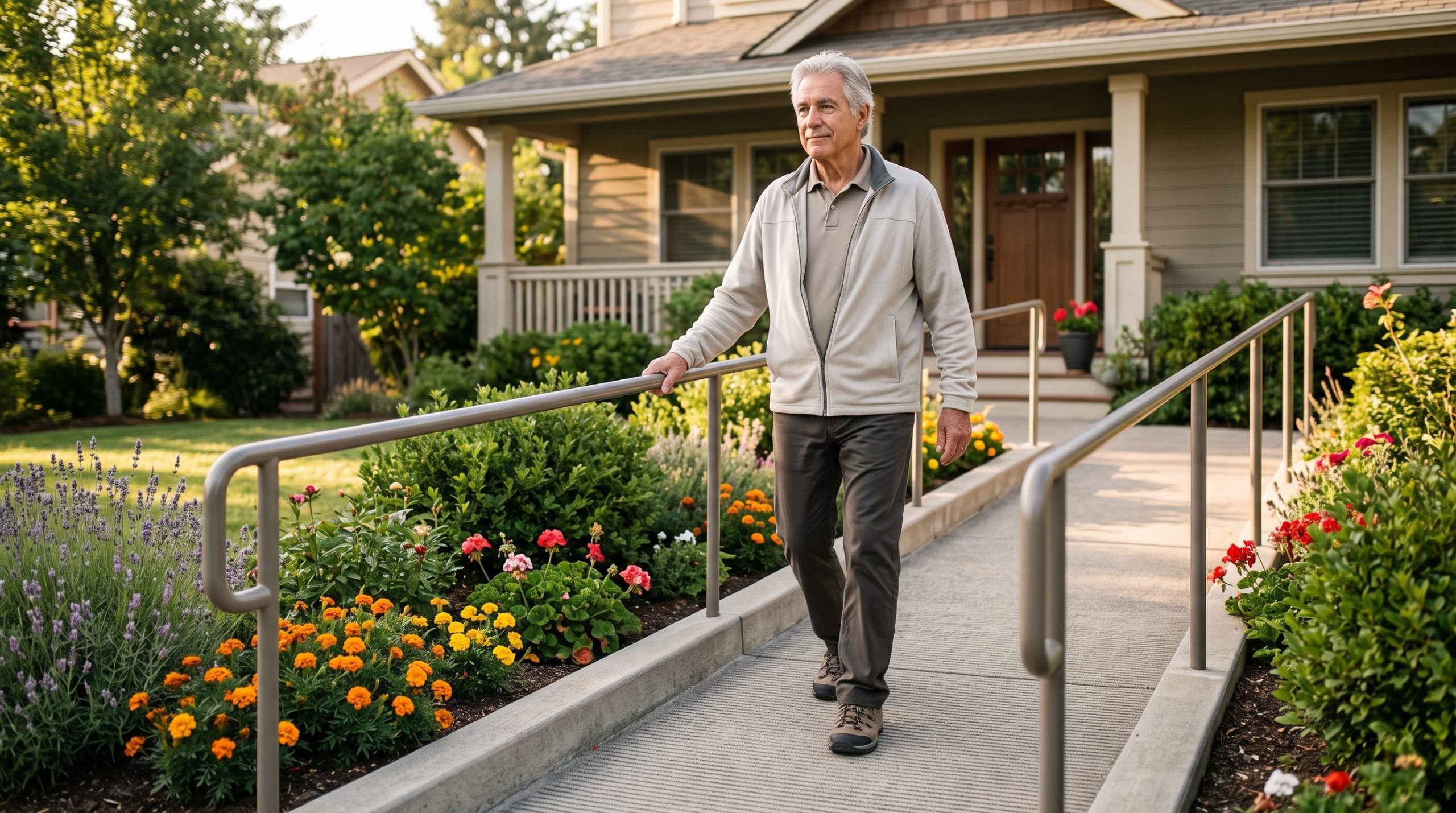
Ramps, from modular aluminum systems to landscaped poured-concrete rampscapes
Walk-in or curbless showers and bathroom layout changes
Railings for steps, stairs, and entries
Lighting upgrades and safer furniture arrangements
Why Suction-Cup Grab Bars Are Dangerous
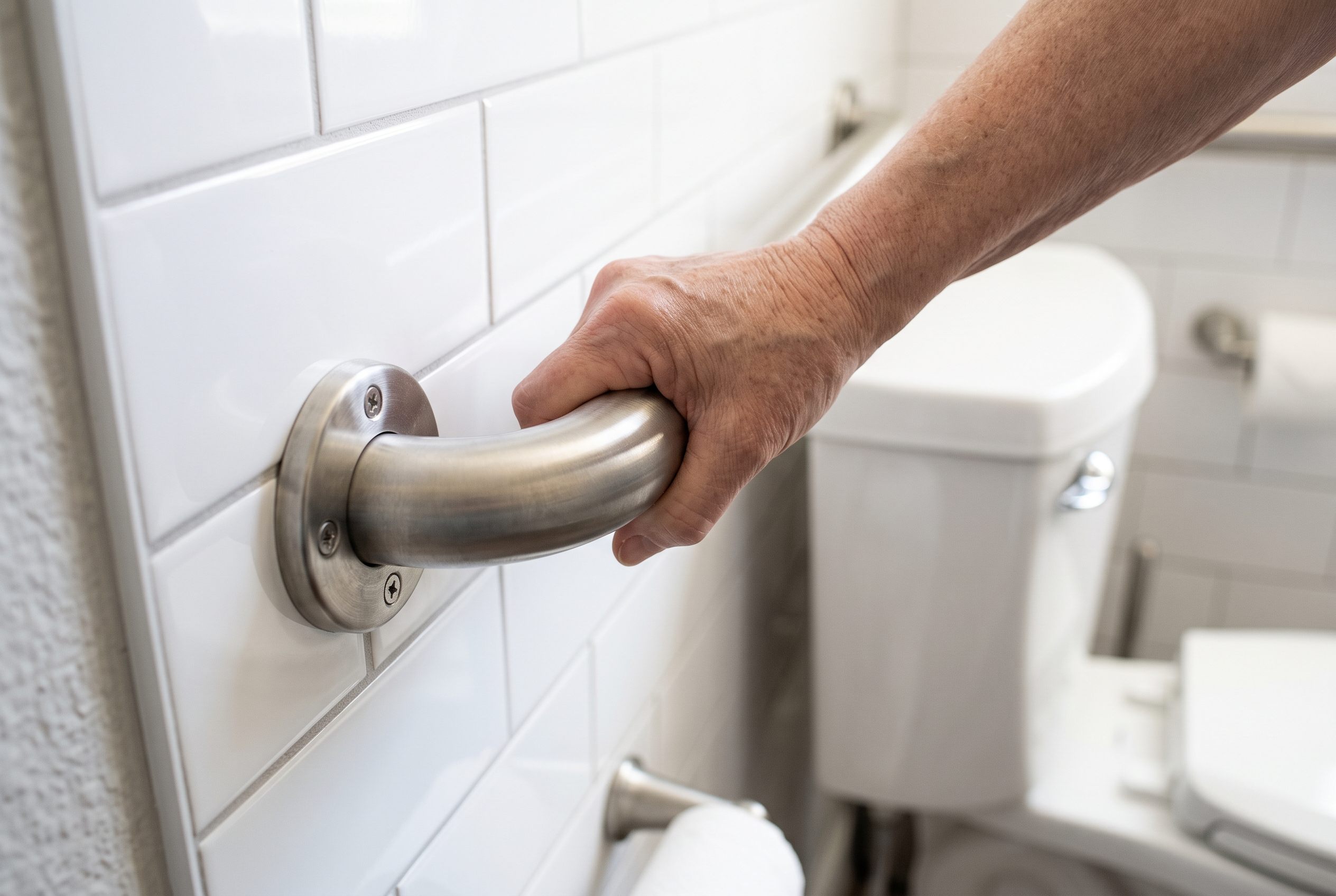
Suction-cup bars sold at big-box stores can release without warning, often at the exact moment someone puts their full weight on them. A bar that fails mid-transfer can cause the very fall it was meant to prevent. A real grab bar must be anchored into a stud or solid blocking behind the wall.
Ramp Options That Fit Your Home
A ramp doesn’t have to look institutional. Modular aluminum ramps go in quickly and can be removed later. Poured-concrete rampscapes blend into the landscaping, creating a gentle approach that looks like it was always part of the home. My report specifies the length, landings, and route your situation requires.
Keeping Caregivers Safe, Too
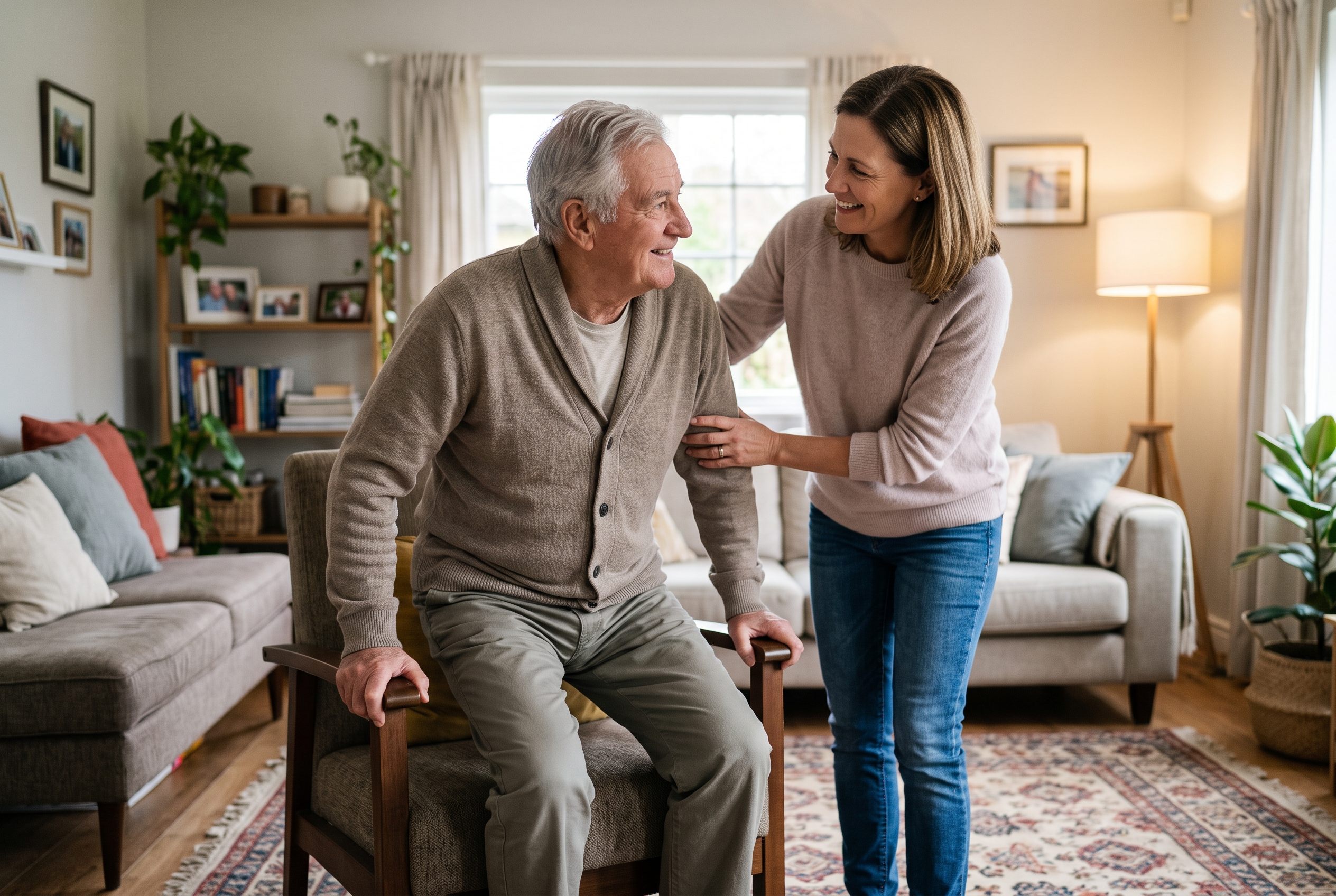
Helping a loved one bathe, stand, or get into bed puts real strain on a caregiver’s back and shoulders. Whether the helper is a spouse, an adult child, or an in-home aide, I look at how assistance happens and recommend changes that protect both people. Simple adjustments, such as the right bar placement or more space beside the toilet, can prevent a caregiver injury that would change everything.
For families handling frequent bed changes, I also recommend Lift Off Linens, a caregiver-friendly bedding system.
Coming Home After a Hospital or Rehab Stay
The days after discharge are when many families realize the house no longer works. Your parent may be using a walker for the first time, recovering from surgery, or still rebuilding strength. An assessment soon after the return home helps you make the most urgent changes first and plan the rest calmly.
If a discharge date is approaching, call me as early as possible so we can schedule the visit around your parent’s return.
What to Expect During Your Visit
Who Should Be There
Your parent, along with the family members or caregivers who help most with daily routines. Their perspective helps me see the full picture.
What to Have Ready
Relevant diagnoses, the mobility equipment your parent uses (cane, walker, wheelchair, shower chair), and notes on recent falls, near-misses, or specific worries.
During the Visit
I’ll ask about routines, then watch your parent move through the home: in and out of the shower, on and off the toilet, up and down steps. I explain what I’m seeing in plain language as we go.
Your Written Report
After the visit, you’ll receive a detailed report with specific recommendations you can hand to any contractor. I remain available to answer questions as you put the plan into action.
How I Help: Real Situations from My Practice
A Caregiver Recovering from His Own Injury
A man recovering from a back injury was also caring for his wife after her stroke. I assessed the whole home, from getting safely in and out of the house to bathroom access and everyday tasks like cooking, so both of them could stay safe and as independent as possible.
The Grab Bar I Put Up for My Own Father
My dad weighs 275 pounds. When he needed a grab bar in his shower, I made sure it was screwed directly into a stud, because a suction-cup bar would never hold him. It’s the same standard I recommend to every family: support that holds when it matters most.
Fall Prevention Assessment FAQs
Should I wait until after a fall, or is a proactive assessment worth it?
A proactive assessment is worth it. After a fall, families often make rushed decisions while a loved one is injured or recovering. Assessing the home early lets you fix the biggest hazards first, budget for larger projects, and help your parent stay home longer.
What areas of the home do you look at?
I evaluate entrances and steps, bathrooms (shower, tub, and toilet), bedrooms, kitchens, hallways, stairs, and lighting. With a private-pay package, you can choose one area, two to three areas, or the whole home.
Can you recommend contractors or vendors?
Yes. While I don’t install anything myself, I can point you toward appropriate solutions and local vendors. You’re always free to choose whomever you prefer, and my report gives every contractor the same clear specifications to bid on.
Can you visit right after my parent leaves the hospital or rehab?
Yes, and it’s one of the most valuable times for an assessment. Call me as soon as you know the discharge date, and I’ll work to schedule the visit close to your parent’s return home.
Aging-in-Place Assessments Near You
I bring this service to older adults and their families in these Hamilton and Marion County communities:
Help Your Parent Stay Home Safely
One visit can replace months of guessing. Let’s find the hazards and build a plan your family can act on.